Kikù Hibino and Merzbow by Ivana Micic
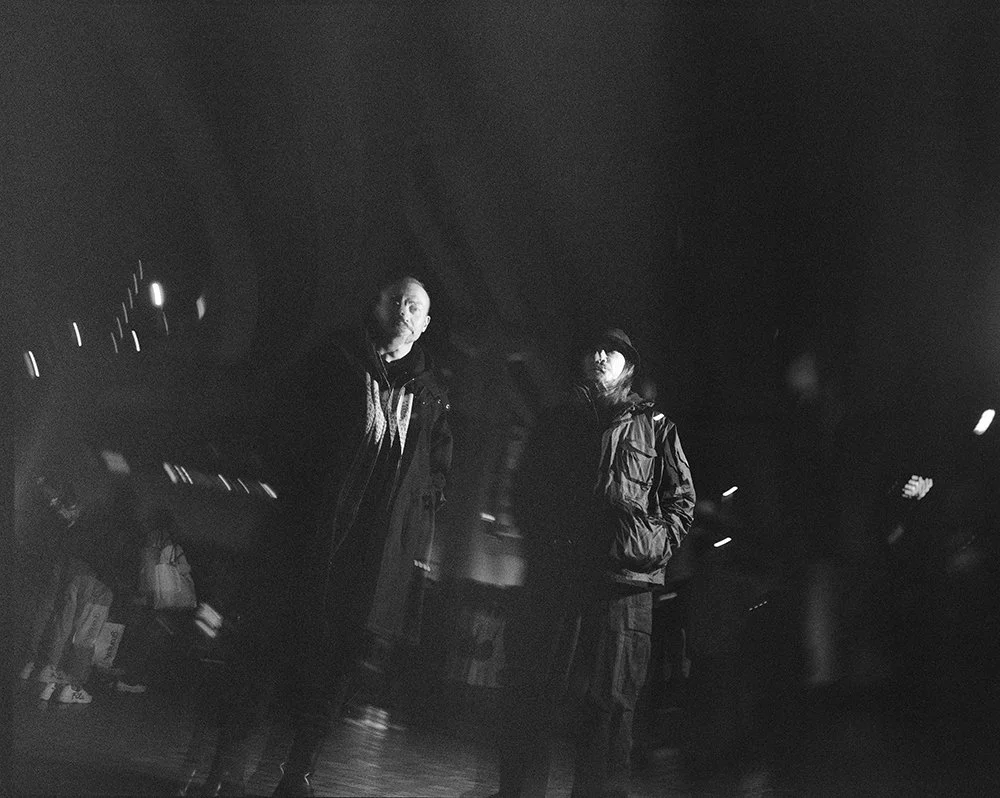
Chicago-based Kikù Hibino’s sonic design is restless and genre-averse. He was born in Nagoya, Japan and introduced to the piano by his grandmother. At his only recital, he developed a distaste for tradition. “The other children played Chopin with ease,” he remembers. “Playing that little song among them was deeply embarrassing. Yet I didn’t envy them. I watched with a certain detachment.” In the 1990s, he departed his culturally conservative hometown to attend Keio University’s Shonan Fujisawa Campus — known for its innovative computer music laboratory. Witnessing laptop performances by Carsten Nicolai and Markus Popp (Oval) exposed Hibino to electronic techniques.
Hibino discovered Merzbow’s material around this period. In a research lab one night, he unearthed a copy of Pulse Demon. “I stopped the CD partway through,” he recalls. “It wasn’t fear or rejection. It felt more like I wasn’t ready yet. I had the impression that this was one possible extreme of what music could become — something I would eventually have to face.” Backstage at the 2002 All Tomorrow’s Parties festival in Los Angeles, Hibino entered a room where Masami Akita (AKA Merzbow) was sitting. He chose not to meet him then, waiting until he could greet him as an artist instead of a fan. In 2021, Hibino launched the imprint Signal Noise with the goal of inaugurating it with a Merzbow record. This intention opened the door to a professional relationship, which further yielded collaboration as peers.
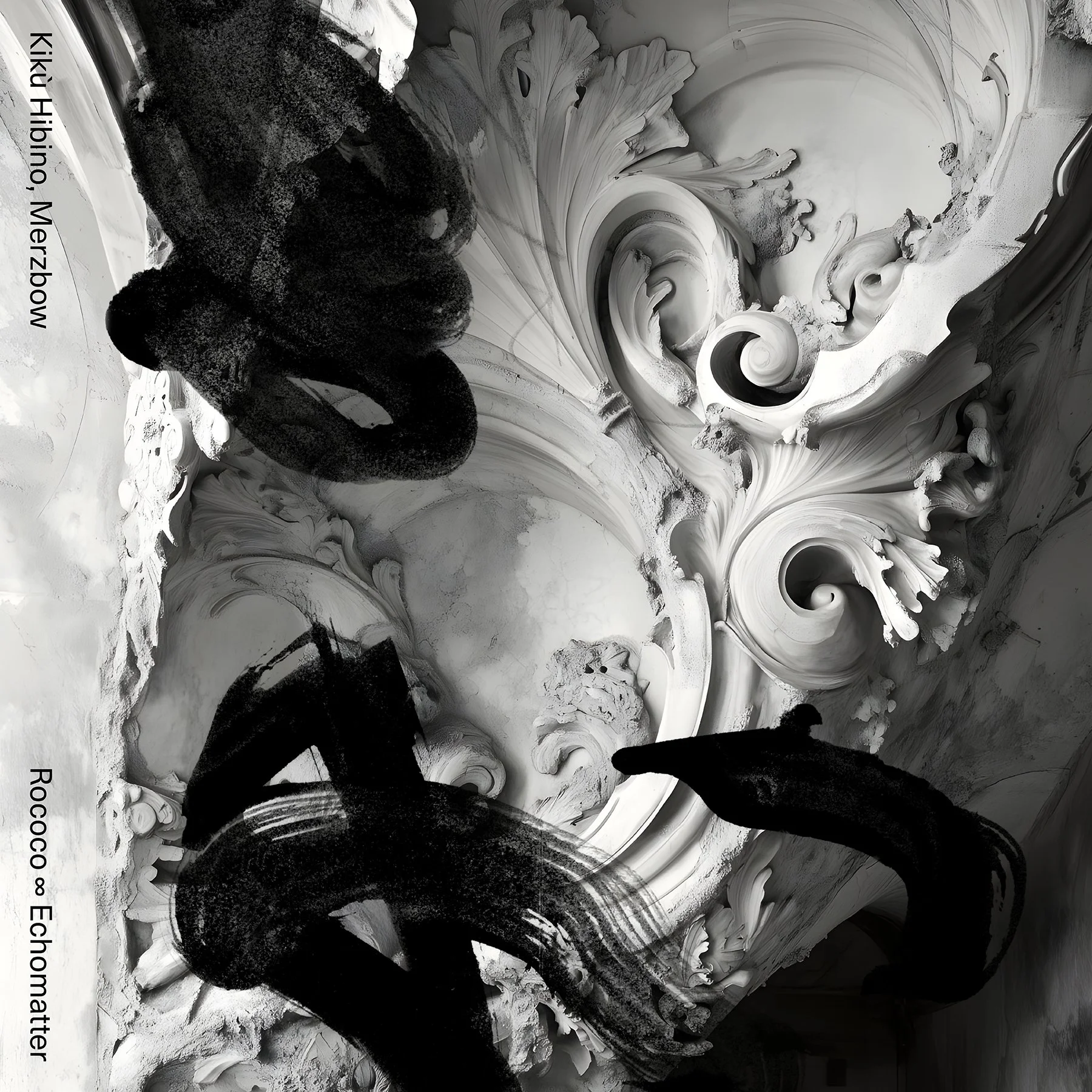
After traversing ambient on 2022’s Fell to Fern and beatmaking on the 2024 release Sky Trajectories, Hibino proposed an abrasive partnership to Akita. On the full-length for recurring label home Superpang, Rococo ∞ Echomatter, the duo present the fruits of their labor. They decided on the title before beginning work, which sparked while Hibino was visiting Italy for a showcase. “In the Vatican and in Florence, I was struck by the ceiling decorations — their endless expansion and excessive ornamentation,” he says. “What stayed with me was a structure with no place for the eye to rest, a movement that seemed to proliferate without end. To express that feeling, I added the infinity symbol.” Endlessness manifests as a structural principle for how noise is organized.
Echomatter emerges from something more personal: The strange persistence of a voice after loss, when words become closer to a physical presence than vibration. The voice becomes material, taking on a physical weight indebted to Jean Cocteau’s Orpheus — as substance that cuts deeper than pure narration.
Merzbow is closely associated with serrated cacophony, but Hibino coaxes out dynamics. Rococo ∞ Echomatter offsets clamor with spoken word embellishments courtesy of Alexandra Cupsa, a cinematic atmosphere, and theatrical pacing. Embracing remote file exchange, final mixing occurred at Experimental Sound Studio in Chicago. “I mainly used Prophet-6, Antilope drum machine, and Eurorack modules, and edited them in Ableton,” Hibino shares. “I would first create a structural sketch of a track. Akita-san would add noise and send it back.” Saxophone by Patrick Shiroishi and Whitney Johnson’s viola interrupt the mass, adding texture to a vital installment in dense discographies. Instead of smoothing Akita’s torrents of noise, Hibino edited them abruptly — using the same method employed by Jean-Luc Godard for jump cuts. Here, noise behaves less like chaos and more as an ornament — proliferating, mutating, and folding back into itself.
Press text by Ted Davis